
Criminal Cases in the Morris County Courts
The Superior Court of New Jersey, Law Division, Criminal Part hears indictable crimes filed in Morris County. That is New Jersey's term for felony-level offenses. The Morris court belongs to the Morris/Sussex Vicinage. Municipal courts hear disorderly-persons and petty-disorderly-persons matters, local ordinances, and traffic cases. They also handle early court functions when an indictable complaint starts locally before it moves to the Prosecutor and Superior Court.
The court clerk is custodian of the case jacket, docket, filed motions, orders, judgment, and sentence. Police departments and MCCF hold different records. A police narrative explains the incident, while a booking entry documents custody. Neither substitutes for the final court disposition. The Morris County court contact guide helps locate judiciary offices in the Morristown complex.
Use the court named on the complaint or notice. The Superior Court and municipal courts do not share one local counter, and a county department cannot retrieve a judiciary file through ordinary GovQA. The main Morris court location is 10 Court Street in Morristown, with the vicinage reached at 862-397-5700. Municipal contacts vary by town, so the complaint number and court code are useful routing clues.
PROMIS/Gavel Morris County Criminal Cases
PROMIS/Gavel Public Access is the main statewide index for criminal defendant cases. Accept its terms, choose the name or case-number route, and select Morris County when the form allows. A full case, indictment, or accusation number is the strongest path. Name searches need care because the index is not fingerprint verification, public identifiers can be limited, and spelling differences can hide or confuse a match.
The official PROMIS/Gavel search is the source for the interface shown here.
The result is case-index data. Verify the count-level disposition and obtain any needed judgment from the clerk before relying on it.
- Complaint
- The initial sworn charging document.
- Indictment
- A grand jury's formal charge allowing an indictable prosecution to proceed.
- Accusation
- A formal charging document used when indictment is waived as New Jersey law permits.
- Disposition
- The way a count ended, including conviction, dismissal, acquittal, downgrade, or transfer.
How to Search Case Records
Start by deciding whether the matter is a Superior Court indictable case or a municipal complaint. PROMIS/Gavel serves the former. Municipal Court Case Search supports complaint, ticket, court, and party routes for lower-level matters. Older or restricted files may require a counter, phone, or records request even when no online result appears.
- Open the correct official system and choose the criminal defendant or municipal case route.
- Search with an exact case number when known, or enter the legal name with spelling variants.
- Select Morris County and use available birth or case identifiers to reduce false matches.
- Read each docket event and the disposition for every filed count.
- Contact the Criminal Division or municipal clerk for copies, certification, archives, or a missing file.
| Field Label | Type | Required | Notes |
|---|---|---|---|
| Last Name | Text | Route dependent | Use the legal surname and try supported spelling variants. |
| First Name | Text | Route dependent | Add it to narrow common surnames. |
| Middle Name | Text | No | Useful as an identity check. |
| County | Dropdown | No | Select Morris for local Superior Court cases. |
| Case Number | Text | Alternative | Indictment, accusation, or judiciary case number gives the best match. |
| SBI Number | Text | Alternative | Use only when known and offered. |
Note: A public index entry may exist even when its filed documents are not available for download.
Morris County Criminal Cases by Court
New Jersey's court labels matter. An indictable first- through fourth-degree crime belongs in Superior Court Criminal Part after screening and charging steps. A disorderly-persons or petty-disorderly-persons offense normally stays in municipal court. A complaint for an indictable charge may first appear through the municipal process before the county Prosecutor decides how to proceed.
| Record route | Typical matter | Custodian |
|---|---|---|
| PROMIS/Gavel | Indictable criminal defendant case | Superior Court Criminal Part |
| Municipal Court Case Search | Disorderly-persons, petty-disorderly-persons, ordinance, or traffic matter | Specific municipal court |
| Clerk request or public terminal | Older file, certified judgment, exhibit, or document not online | Court that holds the file |
The Municipal Court Case Search provides the lower-court interface.
The municipal form is a separate search path, not a countywide criminal-history or SBI repository search.
What the Case File Shows
A Morris County criminal case file records the prosecution as filed and resolved. Look for the case and court number first. Then compare the charging document with later docket events, count-level dispositions, and the judgment. A complaint can be amended, downgraded, dismissed, or replaced by an indictment or accusation. The judgment states the legal outcome more reliably than the first allegation.
| Case Number & Court | Indictment, accusation, complaint, or docket identifier plus county and division. |
|---|---|
| Charging Document | Complaint, indictment, or accusation with statutes, degree, and filed counts. |
| Docket Entries | Arraignment, conferences, motions, plea, trial, judgment, and later court activity. |
| Hearing Dates | Public event date, time, type, and location when displayed. |
| Disposition & Judgment | Conviction, dismissal, acquittal, downgrade, transfer, or another result for each count. |
| Sentence & Conditions | Incarceration, probation, fines, assessments, restitution, and other public terms. |
Morris County Prosecutor Criminal Charge Screening
The Morris County Prosecutor is the county charging official, not a district attorney. Police complaints for indictable matters move to that office for screening and possible grand-jury presentation. The case may proceed by indictment, by accusation where indictment is lawfully waived, or through another disposition. That review explains why the offense in a police or jail record may differ from the charge that later appears in Superior Court.
The Morris County Prosecutor page identifies the office, specialized units, contact channel, and its separate OPRA route. The Prosecutor does not supply a public criminal-history check. Its records can also contain criminal-investigatory, grand-jury, juvenile, victim, fingerprint, and presentence material that is not public.
Stages of a Criminal Case
A complaint-summons generally directs a person to appear while allowing release under stated conditions. A complaint-warrant authorizes custody pending the first appearance and release decision. Pretrial Services assesses risk, and the Prosecutor may seek detention. An indictable case then moves through screening, grand-jury or accusation practice, arraignment, conferences, motions, and resolution.
Case flow: Charges Filed → Arraignment → Pretrial → Plea or Trial → Disposition → Sentencing
Dismissal, downgrade, plea, acquittal, or conviction can end different counts in different ways. Appeals create a separate appellate record. Read the whole docket in date order and use the judgment to distinguish the initial allegation from the final result.
Older Morris County Criminal Case Files
No online result does not prove that a case never existed. Older paper or microfilmed records, exhibits, certified judgments, and documents excluded from remote access may require a clerk request. Contact the Morris Criminal Division through the current vicinage directory, ask whether a public terminal or archive search is needed, and provide the defendant name, aliases, birth date when accepted, county, charge, and any complaint or indictment number.
Judiciary Form CN 10200 is the records request route identified in the research. Court Rule 1:38, not county OPRA, governs the response. The county complex uses 10 Court Street in Morristown and the main court number is 862-397-5700, but the new criminal courthouse project may change rooms or entrances. Confirm the office before visiting.
Ask whether the file can be inspected at a public terminal, sent electronically, copied, or certified. State the requested document, not just the person's name. Useful targets include the complaint, indictment, accusation, order, judgment of conviction, sentence, or a dated docket entry. A clerk may need time to retrieve an archive or review a file for confidential material. Fees and access can differ for paper, microfilm, exhibits, and certified copies.
The U.S. District Court for the District of New Jersey is a separate federal court source.
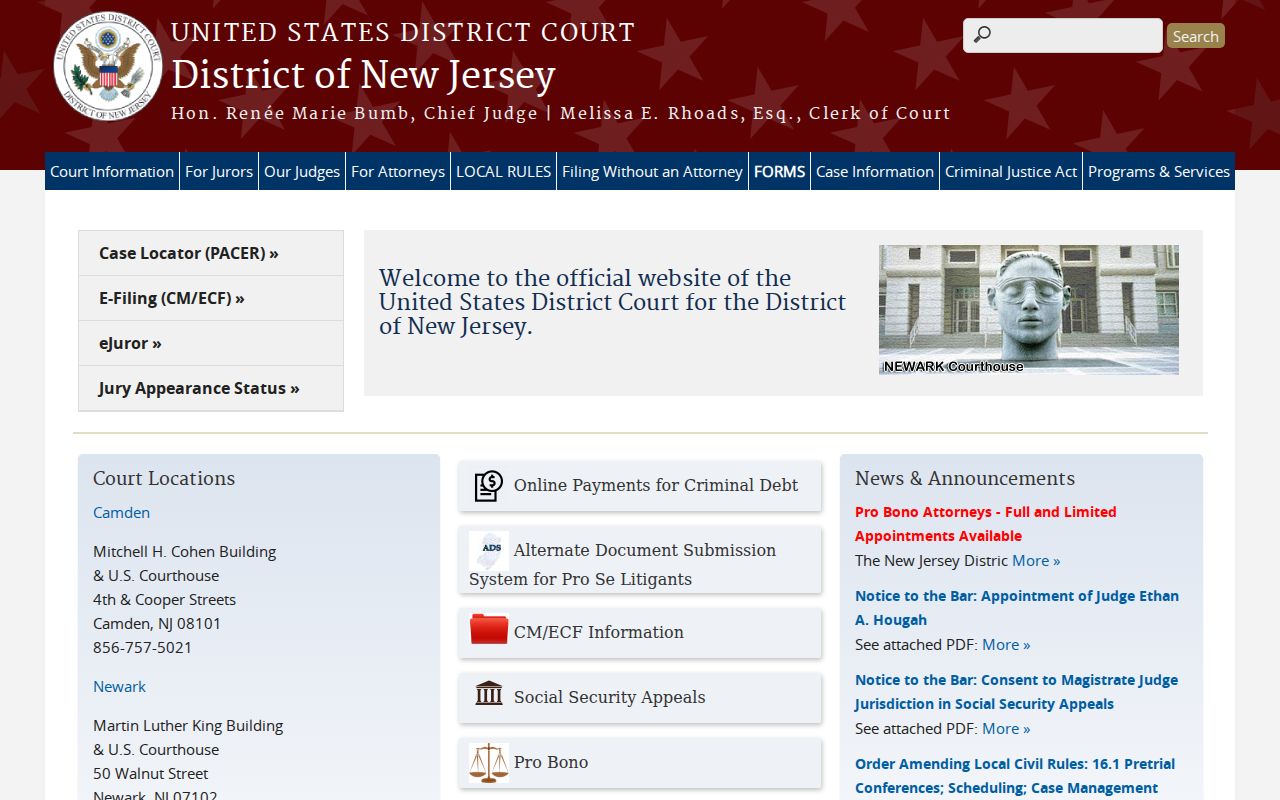
A federal docket will not appear merely because a reader searches the Morris County state court indexes.
Access & Restrictions
New Jersey Court Rule 1:38 controls public access to judiciary records. Juvenile matters, expunged cases, sealed records, protected identifiers, and other confidential categories do not appear as ordinary public files. An online view may redact more detail than a clerk-held file, but that does not make confidential content available at the counter. The clerk may require review before releasing a document.
County GovQA and Sheriff OPRA cannot produce a judiciary court jacket. Send a court-record request to the court. For a police narrative, contact the arresting agency. For a fingerprint-linked personal criminal history, use NJSP. When a docket is visible but a document is not, ask the clerk whether eCourts access, a copy fee, certification, or judicial review applies.
If a public case appears incomplete, compare the docket number and each count before assuming an error. A sealed or expunged case may be absent by law. A missing public document may be available only through a clerk request. A missing disposition should be checked with the court that entered it, then with NJSP if the issue also appears on the person's fingerprint-based state record.
Key rule: New Jersey Court Rule 1:38 governs court records and lists confidential categories.
Morris County Federal Criminal Dockets
Federal criminal cases use another system. PACER provides federal docket sheets and filed documents after registration. Charges are generally billed per page, subject to the federal judiciary's current fee rules and quarterly waiver threshold. The U.S. Attorney's Office for the District of New Jersey prosecutes federal cases, while federal custody belongs in the Bureau of Prisons locator rather than NJDOC or MCCF records.
The official PACER service is the source for the federal docket interface.
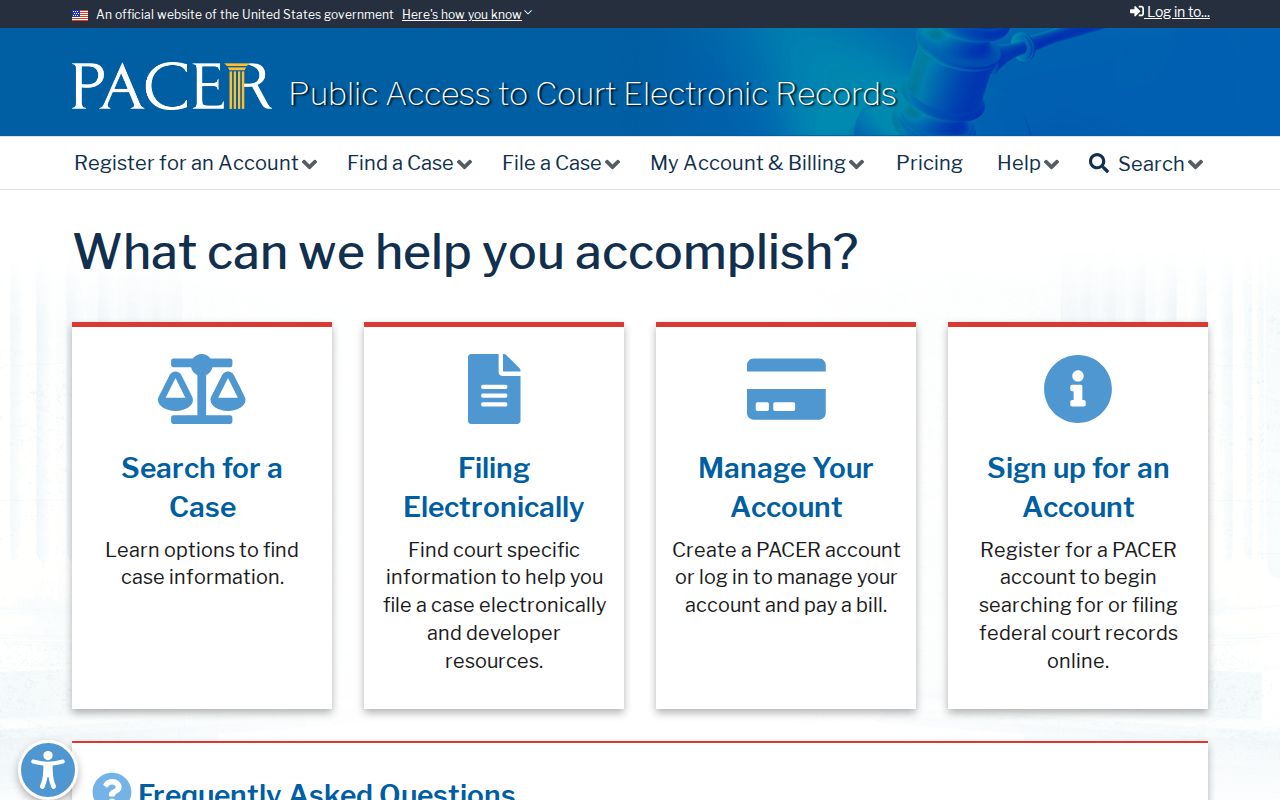
PACER supplements the state and municipal systems only when the prosecution is federal.
Note: The court that filed the case determines which index, clerk, and access rule applies.